Monday, 30 November 2015

Focus Group

Even though I created a questionnaire and showed the results, I decided to undertake further research in order to obtain more insight in to what other, unbiased, people think about my ideas. By creating a focus group I was able to see what others think in more detail as well as seeing their facial expressions towards possible ideas. Here is the transcript of the focus group between Matilda, Emma, Ellie and I:

Me: Do you like the name of my magazine 'RPM'? Do you think it fits the genre?
Ellie: Yeah I like it and think it's appropriate
Emma: It's okay but I don't understand what it means so I can't tell if it fits the genre
Matilda: I think it sounds professional but yeah what does it mean
Me: It stands for 'Revolutions per minute' which represents the revs of a record which was more widely used years ago
Matilda: Oh yeah then sure, it looks good!

Me: So, do you like the idea of my colour scheme of Purple, Grey, Black, Navy and White?
Emma: Yeah it sounds like it would look good but I would have to see it before agreeing completely
Matilda: I don't think it sounds very interesting but yeah same, I would have to see it first

Me: Where do you think I should do my photoshoot for my DPS and for the main image on the contents page?
Matilda: Well I like the idea of a creative vibe because of the clothing choices and colour scheme so your idea of Shoreditch is probably a good contender
Me: I know but it is so generic for an indie magazine to have an 'edgy' vibe because a lot of music scenes are in Shoreditch so I am trying to achieve something different
Matilda: You could pull it off anywhere I suppose, did you have any ideas?
Ellie: I like the scene of like a chilled out and relaxed sort of scene, could just be sitting in a room with good lighting and props...
Me: Yeah I was thinking that I like the idea of being free... my model (and music artist for the magazine) creates indie music which represents the freedom that they have with their label to create the music they desire. So with that in mind I had visualised my model being in an environment that is vast and symbolises having the space to do what you want; maybe in the countryside somewhere?
Emma: Yeah I like that idea! And it's good that you can justify why you have chosen that location
Matilda: Yes that could look good

Me: How do you think I should dress my model?
Matilda: Well what's her name and what does she look like
Me: I have not yet decided what her 'stage name' is yet - I was thinking Beatrice - she is average height, like dark blonde/light brown hair, is healthy so has a good physique etc
Emma; Hmm, I'm not sure. What is your main idea and I'll tell you if I like it or not
Me: Well I was thinking to have her look kind of sporty, so in a white/grey sports bra with this sort of ski jacket thing which is white and purple, also with like leggings or maybe ripped jeans with sports trainers
Ellie: I think if she has a nice body then you could pull it off because it would attract the audience and I think the colours used for clothes would fit in well with the color scheme you want to use
Matilda: Yeah I agree

Me: How much would you pay for my magazine?
Ellie: I don't know, if it would be up to a good, professional standard then I'd probably pay up to £5
Matilda: No more than £4 I think
Emma: Probably in the middle, so about £4.50 ish
Me: Yes it would be up to a good standard and will also include a competition with the chance of a prize inside
Matilda: Oh well if there's a prize then I would pay about the same as Emma, I don't know why but £5 just seems too expensive

Me: On my DPS the story was going to feature the main model, on tour describing her experience. Do you like that idea?
Emma: Yeah it could be interesting if you consider the detail
Matilda: Hm dunno, maybe if you make it fun and compliant with the genre and niche audience
Ellie: Yeah I think it is a good idea because it would intrigue the reader as to what they are up to now
Me: Yeah that's what I was thinking

Me: Well thank you for your time! I will consider your input and make necessary implications to my magazine.
Matilda/Emma/Ellie: Thanks.

Sunday, 29 November 2015

Questionnaire Results


Question 1 shows the most popular colour scheme was C - Purple, Grey, Black and Navy. I agree with this as I believe the colours are different to other music magazines and would offer a fresh insight in to the genre. However, I will also probably use white as well because it is a neutral colour that would also tie in with the colour scheme. On Question 2, E (£4.75) was the option picked the most which means that is what most people would pay. I think this is an appropriate price, but I also think £3.25 is as well but will discuss this in the focus group I create.


Question 3 shows that about 50% of people who took part in the questionnaire chose Shoreditch as the preferred location. I like this location because it is notorious for being an arty area with lots of personality and appropriate for the sort of pictures I want to take. Although, I feel that given my time frame to create this magazine, I may have to rush things to get the photoshoot to take place in Shoreditch which I do not want to do. Therefore when I am planning my magazine I will brainstorm more ideas that would be suitable for my magazine. The fourth question shows around 85% of people asked, chose the option of a monthly issue compared to a weekly issue which I agree with because there would not be a high standard of information to release weekly, whereas monthly the magazine would be jam-packed.


The fifth question confirms that the audience is unsure of whether the magazine should include a free CD. I sent texts to a few people to see what they think about the idea and this is their response beside:


Because of this response, I think I will include a free CD, because it means more people will buy the magazine (if they are interested in the music I am advertising). Question 6 shows that the most popular cover lines are D (The reinvention of...), A (First major interview of...) and B (Interview from...). These cover lines are appropriate, but I will probably amend them and add to them whilst I go along.


Question 7 represents 80% of the people who took part in the questionnaire saying no to me including competitions for concerts and gigs inside the magazine. However, I think it is a good idea because I am hoping to intrigue people who are enthusiastic about this genre of music and by including the chance of winning a ticket/s to a gig, it may encourage them to buy the magazine. Also I allowed the 50 people I gave the questionnaire to, to add suggestions for competitions and the most popular suggestions included money, meets and greets and free merchandise. I think these are all appropriate ideas which I will consider when creating my magazine. The eighth question, I think, is not important. I no longer like these names and when dressing my model and discovering her identity, I will come up with a suitable name.


The ninth question shows the most popular choice of clothing is A, however I don't think I should commit to one style. I will experiment with different clothes which will suit my model in different ways, which I think is the most sensible choice. Question 10 shows a split decision between all stories. I think the most interesting story would be my model is on tour, because I could ask an array of questions regarding her life, career and the tour so I could cover a variety of subjects which would interest the reader the most.

Questionnaire


I created a questionnaire which includes various questions that are appropriate for an audience to answer. I gave the questionnaire to approximately 50 people including males and females from the age of 19+. I have shown the results in the post above.

Friday, 20 November 2015

Font ideas

When discussing the genre of my magazine I knew I had to make the name of the magazine reflective of the music industry and particularly suited regarding typography. I visited the website 'DaFont.com' and found various styles that I could use to make the name (RPM) seem professional and eye-catching whilst suiting the genre.
Below, I have shown six fonts which caught my eye when looking through the website. I feel like they are reflective of the indie genre as they are unique and alternative, much like my chosen genre:


I like all of these fonts however I think a few of them are impractical. The top right style of 'RPM' is not clear as the R is reversed which makes it difficult to read, especially when there is an array of colours and other distracting words featuring on the front page. Also the bottom left choice of style is unclear as the letters are warped and amongst other colours it could be difficult to decipher. 
In light of this, I deleted these two options from my list and put the rest on my Twitter account to see what other people thought of my choices.

Social Media Response:


As shown above, everyone who replied chose the first or second option (top left and top right of the Twitter choices). This means the last two are being disregarded and will not be used for the name of my magazine. After looking through the options again I decided that my favourite option is the first one (top left) because it is clear, bold, eye-catching and is unique to my magazine. However, I will not be using this exact font because I want to make my own that I will be able to make specific to my magazine. I did this social media response work to see which font people thought looked best, in order for me to be inspired by it and base the font I will make on the design of this font. I will later show how I create my font but below I have shown the font I will be inspired by:


House Style

What is a House Style?

House style is where a magazine uses the same layout/structure/design each issue to advertise fluency and professionalism. This includes the masthead, font, colours, logo, placement of pictures and so on. House style is used on practically every magazine because it gives the magazine a specific look which will be easily recognisable to the niche audience. This is important because people who are looking for a specific magazine will not recognise it if the style is completely different, so keeping the house style the same is effective.

Image result for q magazineImage result for q magazineImage result for q magazine

For example, above I have shown three images of Q magazine which are all similar in many ways. The logo is always red and white and featured in the top left of the page. The colours on the page are usually red, black and white which fits in with the rock theme. The image features only the face of the celebrity which sometimes goes in front of/or behind the logo. The main cover line is shown at the bottom middle of the page which makes it bold, clear and anchors the main image. This makes the magazine easy for the niche audience to recognise.

Star Image

What is a Star Image?

Richard Dyer came up with the Star Image theory which basically describes how celebrities are constructed, artificial images to suit whatever audience they want/are told to appeal to.  Dyer proposed that:

A star is an image not a real person that is constructed (as any other aspect of fiction is) out of a range of materials (eg advertising, magazines etc as well as films [music]).

It is also assumed that music stars have the advantage over film stars and depend more on a consistent image rather than their creative input into the industry. Also the niche audience has an impact on what a star becomes, because the aim of the industry is to make money and various aspects of a star's persona will sell to an audience if they are interesting which is why the image of celebrities change over time, to appeal to a range of audiences. Dyer said:

Stars are commodities produced and consumed on the strength of their meanings.

Ideology and culture also add to a celebrity's star image because it enhances their values and can interest various people, for example Lady Gaga uses social networks to express her thoughts on LGBT issues. Various people become interested in her ideologies and may keep a tab on what is happening because of her.

Character and personality also contribute to a star image, people get attention for what they look like and then what values and traits they have. For example, when Justin Bieber began to act against social norms with arrests due to speeding and assault he lost a fraction of his fan base because they disliked the personality he had come to obtain. Stars also give people an idea of what they aspire to look like for example most female music stars (e.g. Taylor Swift) are thin and beautiful which can either have a good or bad impact on an audience because they feel like they should look like that.

Regardless of these factors, star images are created so that the music industry can make money. Artists like One Direction barely write any of their own songs but they are attractive to their niche audience and have good singing voices which is why they are so well-known, whilst the writers and producers of these songs/music videos will get hardly any credit.

An example of how a star image has changed over time is Ariana Grande, a famous, young pop-star. At the beginning of her career she was on a children's show 'Victorious' and seemed very sweet and innocent, then she began a music career and remained sweet and innocent for only a matter of time until she had to change her persona. Her body quickly became sexualised when she performed her big hits, always wearing skimpy outfits and dancing in a sexual manner. This happened because as she became older her audience changed and she wanted to produce music that would suit her older age group to represent her growing up. However this is an example of how a star changed over time to suit a wider range audience and make more money for the music industry.


Thursday, 19 November 2015

My Choice of Magazine Name

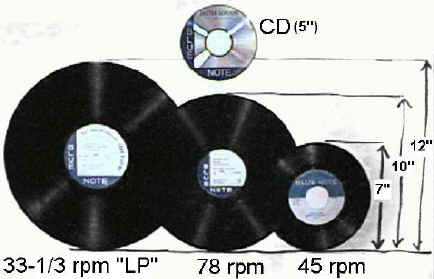
I have chosen to use the title RPM because old style music records are making a comeback in the 21st Century with 3.5million units sold in the United States within the niche market in one year. RPM refers to how many revolutions per minute the record went round the turntable so LP's (33rpm) took longer to play than singles (45rpm) because they were bigger discs and contained the equivalent of a CD today whereas a single only included one track. LP (long-play) records were popular - they went round at the speed of 33.33 recurring rpm and were the equivalent of a CD today, it could play for a maximum of 45 minutes - as well as single records - which went round at the speed of 45 rpm and consisted of a single track which could last up to 3 minutes.

sizes.jpg (33888 bytes)

This name for my magazine is appropriate because I want my magazine to sound and look professional compared to other magazine name choices such as 'Noize' which does not relate to the music industry at all and seems very amateur; which would not appeal to the niche audience. I like the choice of RPM and will experiment with possible fonts, effects and colours to make it look as good as possible.

Tuesday, 17 November 2015

My Genre

The magazine I create will be of the indie genre. Indie originated in the UK in the 1980s within the small, low-budget labels that did not register with the mainstream. The bands and artists involved were categorised as free when it came to exploring sounds, subjects and emotions which gave them the space to create the music they wanted without their labels influence.

The Smiths from the UK rejected the dominant synthpop (where the synthesizer is the dominant instrument) of the early 1980s and helped inspire guitar-based jangle pop (alternative rock that marked the return of chiming or jangly guitars)

Nirvana performing in 1993

In the 1990s many alternative bands followed Nirvana into the mainstream and indie began to describe those bands that worked in a variety of styles and did not pursue commercial success. In the 2000s a new wave of indie developed due to changes in the music industry and music technology.  A new group of bands that played a stripped-down and back-to-basics version of guitar rock emerged into the mainstream including; The Strokes and The Vines.


The Strokes performing in 2006

Many countries have developed an indie scene, flourishing with bands with enough popularity to survive inside their respective country, but virtually unknown elsewhere.

Initial Ideas explained

I have decided to use the indie genre for my music magazine. In order to learn more about the indie music scene, I researched the history of the genre and also annotated magazines to find out more about the conventions. The genre appeals to a niche audience and is slowly becoming more and more popular within today's society, and particularly the music industry. In this post I will be discussing possible conventions that I will use on my magazine. I have made a mind map of 'initial ideas' and since looking over that I have come up with my favourite ideas.


Names/Masthead:
Noize
Sound Bite
Point Blank
RPM
Current
Bracket
My favourite name for my magazine is RPM (which stands for revolutions per minute). This is because I think it sounds like the most professional  name which will stand out to the niche audience that I discuss below. Also it relates to music and the initialism of the word makes it look good and easy to remember because it is short and decipherable.

Price & Date:
December 2015
Winter 2015
Dec 15
01/12/15
£1.85
£3.25
£2.50
On my magazine I will use the date format of 'December 2015' because the issue will be released monthly. Also at the minute I think the price of the magazine should be £3.25 because the magazine will contain good quality images and information which will both have taken work to make, I think it is an acceptable price.

Colour:
Navy - White - Black - Grey
Purple - Grey - Black - Navy
Blue - Orange - Yellow - Red - Green
Orange - Olive Green - Red - Black
Dark Green - Light Green - White - Red/Maroon
Again, I am not sure what colour scheme I should use throughout my magazine so I will be using social media to gather other people's opinions. I will do that by gathering potential colours together to make a swatch and then use direct messaging on Twitter or Instagram to ask people which colour scheme they prefer.

Audience:
Men aged 25-41
Teenagers aged 12-19
Men and women aged 19+
Men and women aged 50+
I think the audience for my magazine will be males and females aged 19+ because the indie genre can be representative of either gender as the music that is produced through independent labels can represent a variety. Also the age would probably be varied but 19+ I think, depending on what colours and stories I decide to use within my magazine.

The Mode of Address for my magazine will be partly sophisticated, however the language used will sometimes be colloquial and chatty to make it easy for the audience to read. I want the language used to appeal to most age groups, as shown above I think my magazine will be suitable for both sexes aged 19+, so the language should be mature and taboo language could be used to appeal most to the niche audience. However, the language should not be so prestigious that it makes the magazine difficult to read, the reader should be able to easily enjoy reading the articles inside without getting confused and/or frustrated with the language. This will not be difficult because I am aware of how to appeal to the audience and know what and what not to do.

Initial Ideas Mind-Map